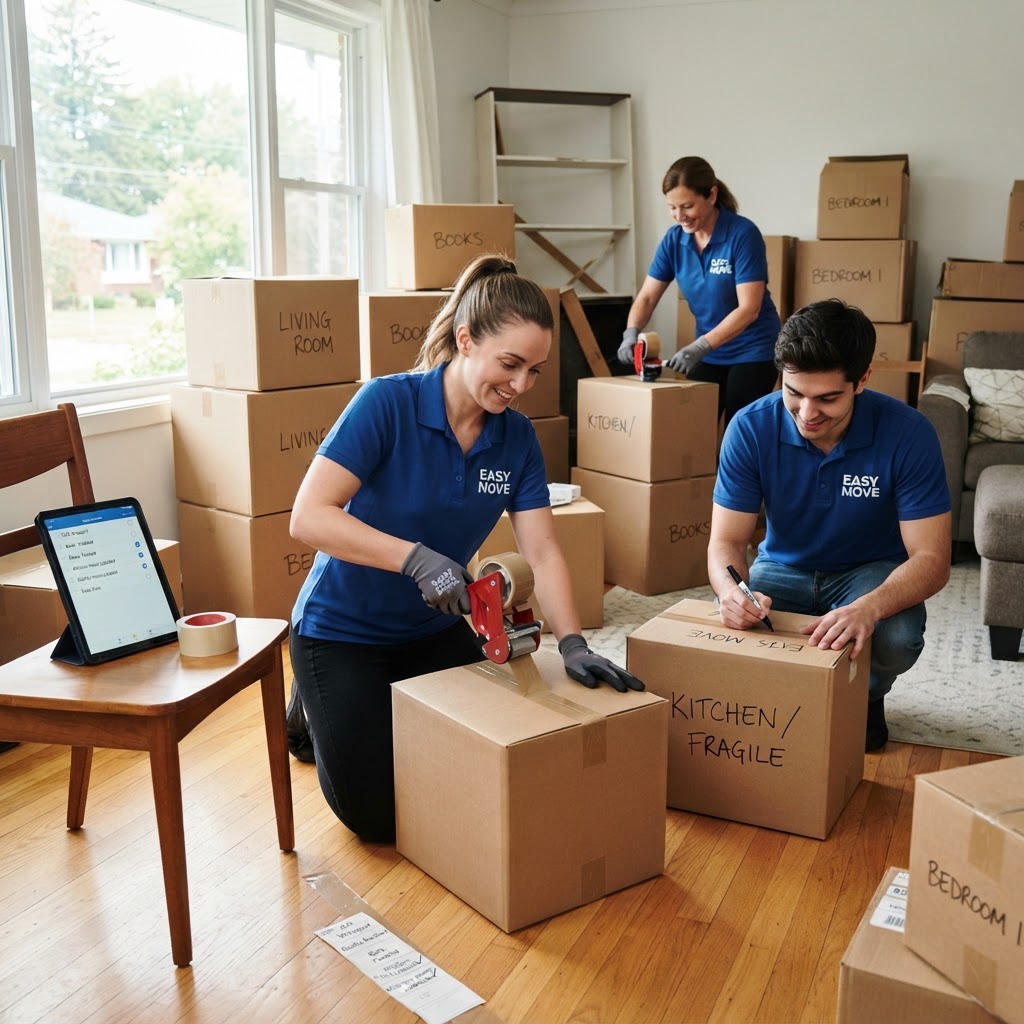
Getting the news that you have to move in a week is its own kind of shock. Whether it's a new job, a lease that ended sooner than expected, or a family situation that can't wait, the pressure always lands in the same place: everything you own has to end up in boxes, and soon.
The good news is that short-notice packing isn't about moving faster. It's about deciding faster. Here is how our crews break down the first 48 hours of a rushed move, in the order that keeps the chaos contained.
Hour 1 to 3: Lock the Date and Book Your Crew
Before a single box gets taped, lock your move date and book your packing crew. Short-notice jobs fill fast, and every hour you spend deliberating is an hour you lose on the other end. Have three things ready when you call: your move-out date, whether you need packing, unpacking, or both, and a rough count of bedrooms and rooms to pack.
One thing people miss: packing usually happens a day or two before the truck loads. That means packing is the part of a rushed move you can control, and locking it early keeps you from wrapping a kitchen at midnight the night before the truck shows up.
Hour 3 to 8: Make the Three Piles
Every rushed move lives or dies on this step. Walk through your home and sort everything into three piles — moving with you, donating or selling, and trash. Be ruthless. Every item you leave behind is an item you don't pay to move, wrap, and unpack later.
Start with the easy wins: expired food, broken furniture, clothes that no longer fit, duplicate kitchen items. Then tackle the harder pile. If you haven't used something in a year, it belongs in the donate pile. This is the single biggest time-saver in a short-notice move, and it costs nothing.
Day One Evening: Pack the Rooms You Never Use
The first rooms you pack should be the ones you won't miss. Guest rooms, seasonal decorations, storage closets, the garage, out-of-season clothing. These spaces hold more volume than people expect, and packing them first clears the way for the rooms that actually need care.
Label every box on the top and on one side, and write the destination room, not just the contents. "Primary bath" beats "towels" the moment you're standing in a hallway full of boxes.
Day Two: Kitchen, Bathroom, and the Essentials Box
The kitchen is the longest room in any home, because every single item needs wrapping. Leave it for the professionals if you can. If you're packing it yourself, empty one counter at a time, wrap all glassware in paper, and keep plates on edge rather than stacked flat.
Before you seal anything, build one Essentials Box: bedding, towels, chargers, toiletries, medications, a change of clothes, paper plates, and a roll of tape. That box rides with you, not the truck. It's the difference between sleeping well on night one and digging through twenty boxes for a toothbrush.
Hand Off the Fragile Items and the Furniture
Artwork, mirrors, televisions, and glass tabletops are where rushed packing turns into damage claims. These items need custom cardboard inserts, edge protection, and boxes built for the job. Our crews bring those materials with them, along with the manpower to move heavy furniture safely.
Frequently Asked Questions
Ready to get packed without the panic? Book your service today and we'll handle the boxes while you handle the rest.
Found this helpful?
Back to Blog